
The history of olive oil
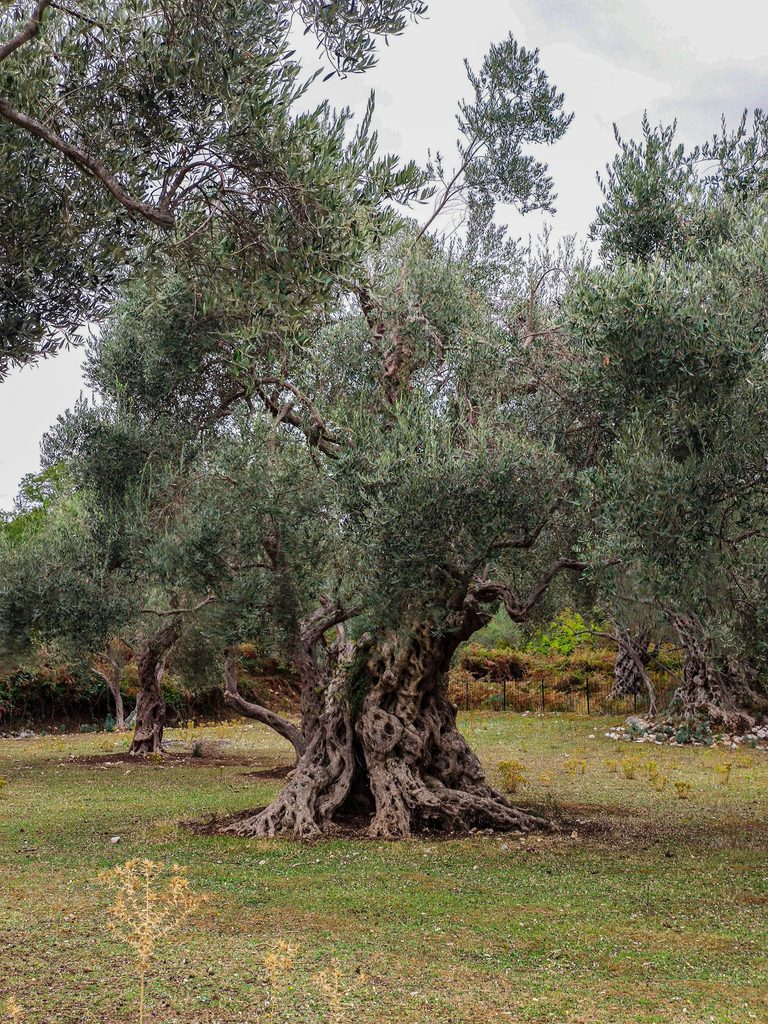
The use of wild olive trees gradually gave way to olive cultivation. Olives and olive oil became highly valued products around the Mediterranean. What began with the use of wild olive trees developed into one of the most highly valued agricultural products of the Mediterranean region.
The Early Beginnings in the Levant
The southern Levant is a region on the eastern side of the Mediterranean. It includes parts of present-day Syria, Lebanon, Israel, the Palestinian territories and Jordan. Archaeological and botanical research suggests that olive cultivation began there around 7,000 years ago. Even earlier evidence of olive oil production has been found in the same region. From the eastern Mediterranean, olive cultivation spread further around the Mediterranean over the course of thousands of years.
More Than Just Food in Antiquity
In classical antiquity, olive oil had enormous cultural and economic value. It was used not only as food, but for many other purposes:
- Fuel: olive oil was used as fuel for oil lamps in homes and temples.
- Medicinal and cosmetic uses: Greek and Roman physicians, such as Hippocrates, prescribed oils for a variety of purposes. Athletes rubbed oil onto their bodies.
- Symbolism: the olive branch became a universal symbol of peace, wisdom and victory.
Trade and Spread Across the Mediterranean
Olive oil was already traded on a large scale during the Bronze Age. In the centuries that followed, trade networks around the Mediterranean contributed to the further spread of olives and olive oil. Olive cultivation and olive oil were also of great economic importance to the Romans.
An Ancient Oil, a Modern Quality Classification
Olive oil has been produced for thousands of years, but today’s system of precisely defined quality categories is much more recent. For a long time, quality was assessed mainly at a local level, based on experience, taste and the reputation of a region or producer. As international trade expanded, a need arose for common definitions, methods of analysis and designations.
The International Olive Council (IOC) plays an important role in this. This intergovernmental organisation was established in 1959 under the auspices of the United Nations and is based in Madrid. The IOC develops international standards for olive oil and table olives, supports research and works to harmonise methods of analysis.
IOC standards do not automatically have the force of law everywhere. Countries and regional organisations, including the European Union, incorporate such definitions and methods into their own legislation. As a result, the precise legal provisions may differ between markets, while many of the underlying principles are internationally aligned.
When Did ‘Extra Virgin’ Emerge?
The words extra virgin may sound traditional, but the current official quality category is relatively modern. In 1991, European legislation laid down a detailed classification of olive oil, including physico-chemical characteristics and a method for assessing aroma and flavour.
This did not mean that extra virgin olive oil was invented as a new type of oil. High-quality olive oil had, of course, existed for much longer. What was new was that the designation became linked to measurable requirements and a standardised sensory assessment.
The official Dutch designation is extra olijfolie van de eerste persing. In everyday Dutch, extra vierge olijfolie is generally used. To qualify for this highest quality category within the European Union, the oil must meet various chemical limits. In addition, no defects may be detected during the official sensory assessment and fruitiness must be perceptible.
Low acidity alone is therefore not sufficient. The quality category is determined by a combination of chemical analysis and sensory assessment.
The Development of the Sensory Panel
Aroma and flavour cannot be fully described by a single laboratory value. Virgin olive oil is therefore also assessed by a trained sensory panel. Panel members taste independently and assess, among other things, fruitiness and possible defects such as rancidity, mustiness or undesirable aromas and flavours caused by fermentation, for example a winey or vinegary aroma.
The assessment is not simply a matter of personal preference. Panel members follow a standardised method, use agreed terminology, and their individual assessments are processed statistically. A recognised panel must also regularly demonstrate that it performs with sufficient consistency.
Nevertheless, sensory analysis remains a human process. Training, concentration and the conditions under which tasting takes place can influence an assessment. This is one reason why research is being conducted into whether instrumental techniques can support sensory panels.
New Techniques
Alongside chemical analyses and assessment by trained sensory panels, new techniques are being developed to investigate olive oil quality. One example is the electronic nose, or e-nose. Such a system analyses patterns of volatile compounds in the air above the oil and can provide additional information for quality assessment.
The capabilities vary between devices and the technology is still developing. For now, these techniques do not replace the official methods of analysis or the trained sensory panel. We will explore how the e-nose works and its potential applications in more detail later.
Sources & Further Reading
- Barazani O., Dag A. & Dunseth Z. (2023). The History of Olive Cultivation in the Southern Levant
- International Olive Council. Who We Are
- International Olive Council. (2020). 60 Years of Standardisation
- European Commission. (1991). Commission Regulation (EEC) No 2568/91 on the characteristics of olive oil and olive-residue oil and on the relevant methods of analysis
- European Commission. (2022, consolidated text 2024). Commission Delegated Regulation (EU) 2022/2104 as regards marketing standards for olive oil
- European Commission. (2022, consolidated text 2024). Commission Implementing Regulation (EU) 2022/2105 laying down rules on conformity checks of marketing standards for olive oil and methods of analysis
- Navarro Soto J.P., Illana Rico S., Martínez Gila D.M. & Satorres Martínez S. (2024). Influence of the Degree of Fruitiness on the Quality Assessment of Virgin Olive Oils Using Electronic Nose Technology